Members

Buildings
Flag of Kyrgyzstan
Ratification
UNCCD annex
Annex II: Asia
UNCCD Subregion
Central Asia

Ministries

Ministry of Water Resources, Agriculture and Processing Industry of the Kyrgyz Republic

The Ministry of Water Resources, Agriculture and Processing Industry of the Kyrgyz Republic (hereinafter referred to as “the Ministry”) is the central executive authority responsible for implementing state policy in the fields of agriculture, land and water resources, irrigation and reclamation infrastructure, as well as the processing industry.

Minister

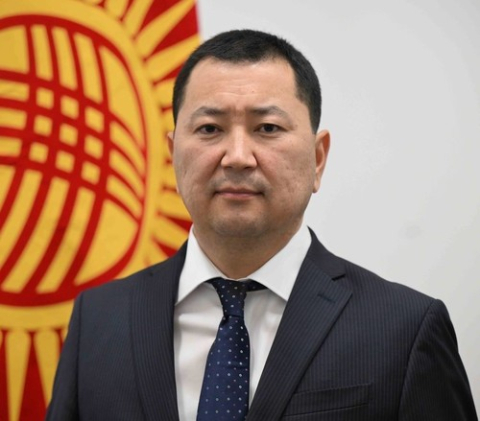
Bakyt Torobayev

Phone
+996312623633
Image
torobaev-bakyt-ergeshevich

National Focal Points

Sokeev Almazbek Temurbekovich
Position
Deputy Minister
Institution
Ministry of Water Resources, Agriculture and Processing Industry of the Kyrgyz Republic
Rysbek Apasov
Position
Science and Technology Correspondents/Consultant
Institution
Ministry of Natural Resources, ecology and technical supervision of the Kyrgyz Republic

Voluntary LDN Targets

Kyrgyzstan has set the following LDN Targets

Pasture rotation
Pasture infrastructure
SLM practices
Land reclamation
Pasture rotation

Improve the ecological condition of pastures by introducing a pasture rotation system in (at least) 40 rural municipalities.

Image
bcc439cb1a11e31ba4c72ee53d413f4a4767f4b0
Pasture infrastructure

Improve access to 10,000 hectares of pastures by improving pasture infrastructure (bridges/roads, watering points).

Image
bcc439cb1a11e31ba4c72ee53d413f4a4767f4b0
SLM practices

Implement sustainable land management practices on 100,000 hectares of land (including both pastures and forests).

Image
bcc439cb1a11e31ba4c72ee53d413f4a4767f4b0
Land reclamation

Reclamation work has been carried out on 10,000 hectares of agricultural land.

Image
bcc439cb1a11e31ba4c72ee53d413f4a4767f4b0

Reports on the Implementation of the UNCCD

2022 Report
2018 Report
Document
2014 Report
Download
Document
2012 Report
Document
2010 Report
Document

Environmental challenges covered by the UNCCD

Image
desert with trees
Desertification and drought lead

Desertification and drought lead to a significant increase in the area of ​​land subject to drought, especially during dry years. This increases the vulnerability of the population, especially rural residents, to drought conditions. In addition, there is a decrease in the availability of water resources and a shortage of fresh water, which aggravates the degradation of ecosystems and increases the negative impacts on the environment and the population.

Image
green grass
Soil erosion

A decrease in soil organic carbon reserves, which negatively affects land fertility; an increase in the area of ​​degraded agricultural land; an increase in water and wind erosion processes, a decrease in forest cover of territories.

Image
green trees
Loss of land productivity

A decrease in the productivity of pasture and arable land; an increase in the area of ​​land in a state of degradation; insufficient measures to introduce sustainable agricultural practices.

Causes of degradation and desertification

Natural factors

  • Arid and semi-arid climate (sharp temperature changes, increased heat waves, decreased precipitation, more frequent low water levels, droughts in places);

  • Mountainous terrain with significant slopes that favor washout and erosion of the soil surface horizon;

  • The presence of natural salinization (alkalinization) foci in the soil cover with shallow occurrence of saline groundwater;

  • Relatively "young" soils with a still poor humus layer, weak connectivity of the biophysical and chemical structure (compared to the soils of tropical, "meadow" lowland countries). Accordingly, a low level of natural fertility.

Anthropogenic factors

  • The practice of intensive land cultivation without taking into account the principles of sustainable use of natural resources can lead to soil depletion and a decrease in its fertility;

  • Slow expansion of water-efficient irrigation, collector-drainage systems

  • Excessive pressure on pasture ecosystems can contribute to a decrease in vegetation cover and deterioration of soil conditions.

  • The implementation of mining operations and the development of infrastructure projects can have a technogenic impact on land resources, contributing to their disruption and pollution.

Recommendations for mitigating land degradation and desertification

1. Soil conservation and erosion prevention

  • Development of programs to prevent water and wind erosion (shelters, slope terracing);

  • Introduction of organic farming methods and minimum tillage;

  • Improvement of soil monitoring and early warning systems for degradation.

2. Combating desertification and drought

  • Development and implementation of a national strategy for adaptation to climate change, including water management measures;

  • Promotion of water-saving technologies and sustainable agricultural practices (drip irrigation, agroforestry);

  • Restoration of degraded lands through the introduction of rational pasture use practices.

3. Restoring land productivity

  • Encouragement of the use of sustainable agricultural practices, such as crop rotation and green manure;

  • Development of pasture management taking into account grazing rotation standards;

  • Financial support for farmers implementing sustainable farming methods.

4. Protection of forest resources and biological diversity

  • Large-scale reforestation, especially in arid regions;

  • Creation of new nature conservation areas to preserve biodiversity;

  • Strengthening measures to control illegal logging and extraction of natural resources.


Governmental plans to recover and combat these issues

  1. National Action Plan to Combat Desertification: National Action Plans to Combat Desertification were adopted in 2000, 2014 and 2020 to develop and implement policies to prevent desertification and land degradation. These documents serve as a guide for government agencies and development partners in implementing relevant activities.

  2. The Soil Fertility Improvement Program for 2024-2028 is aimed at restoring and improving soil fertility, preventing the reduction of agricultural land, rational use of such land, protecting and preserving agricultural land from water and wind erosion and desertification, and meets the national interests of the republic in the field of food security in the long term.

  3. Pasture Development Program for 2024–2029: in 2023, the Pasture Development Program for 2024–2029 was approved, the purpose of which is the sustainable development of pasture lands, increasing their productivity and preventing degradation. The program provides for the introduction of effective pasture management methods and support for local communities in their rational use.

  4. National Plan for the Prevention of Hurricane-Strength Winds and Dust and Sand Storms for 2021–2030: a National Action Plan for 2021–2030 has been developed to counter hurricane-strength winds and possible dust and sand storms. Its purpose is to inform and prepare the population for such natural phenomena, as well as to implement measures to minimize their negative impact on ecosystems and agriculture.

  5. Green Economy Development Program: as part of the transition to sustainable development, the Green Economy Development Program was adopted, aimed at introducing environmentally friendly technologies and the rational use of natural resources. The program helps reduce land degradation and improve the environmental situation in the country.

  6. Sustainable Development Goals: Kyrgyzstan is actively working to achieve the Sustainable Development Goals, including the protection and restoration of terrestrial ecosystems, sustainable forest management, and combating desertification. These goals are integrated into national strategies and programs aimed at improving the quality of life and preserving natural resources.


Conducted events

  1. Proclamation of the Five Years of Action for Mountain Development (2023–2027). At the initiative of Kyrgyzstan, the UN General Assembly adopted a resolution declaring 2023–2027 the Five Years of Action for Mountain Development. This underlines the country's commitment to the sustainable development of mountain areas and the conservation of their ecosystems.

  2. Participation in a global initiative to restore mountain ecosystems. Kyrgyzstan is participating in an international program aimed at restoring mountain ecosystems that are facing the effects of climate change, such as melting glaciers and soil erosion. This initiative demonstrates how projects in various regions of the world, including Kyrgyzstan, use restoration measures to increase the resilience of mountain ecosystems.

  3. Land degradation assessment in line with SDG 15.3.1 indicators. The Food and Agriculture Organization of the United Nations (FAO) supports Kyrgyzstan in the transition to more sustainable management of mountain areas, including the use of tools and methods for land degradation assessment in line with SDG 15.3.1 indicators.

  4. Participation in the 2nd phase of the Land Degradation Neutrality Target Setting Programme (LDN TSP 2.0) of the UNCCD. The result of participation will be an update of the LDN targets adopted in 2017.

  5. Participation in Regional projects to combat drought and dust storms (DSS). Assessment and prospective measures for these natural phenomena were included in the developed Regional Strategies under the auspices of CAREC, which are used to attract projects within the framework of the UNCCD global initiatives.