Members

Buildings
Flag of Kazakhstan
Ratification
UNCCD annex
Annex II: Asia
UNCCD Subregion
Central Asia

Ministries

Ministry of Ecology, Geology and Natural Resources of Kazakhstan

The Ministry of ecology and natural resources of the Republic of Kazakhstan is the central executive body of the Republic of Kazakhstan, carrying out leadership in the areas of formation and implementation of state policy, coordination of management processes in the fields of environmental protection, development of the "green economy", waste management (excluding municipal, medical and radioactive waste), protection, control and supervision of the rational use of natural resources, state geological study n edr, use and protection of the water fund, water supply, sanitation, forestry, conservation, reproduction and use of the animal world and specially protected natural territories (hereinafter referred to as regulated areas).

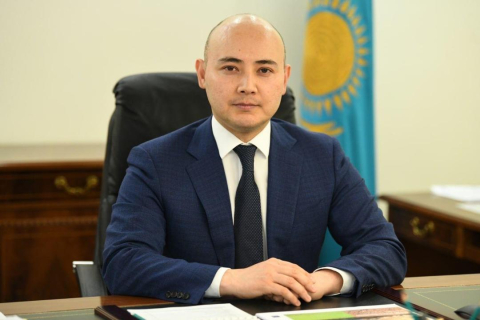
Minister

Nyssanbayev Yerlan

Phone
+7(7172)74-01-11
Image
Nyssanbayev Yerlan

Ministry of Agriculture of Kazakhstan

The Ministry of Agriculture of the Republic of Kazakhstan is a state body of the Republic of Kazakhstan that manages in the following areas agro-industrial complex, irrigated agriculture and melioration, land resources, also, within the limits provided for by law, intersectoral coordination of state bodies in the field of activity within its competence.

Minister

Saparov Aidarbek Seipellovich

Phone
+7 (7172) 55-58-03
Image
Saparov Aidarbek Seipellovich

National Focal Points

Murat Temirzhanov
Position
National Focal Point
Daulet Bizhanov
Position
Alternate Focal Point
Alisher Baiseitov
Position
Science and Technology Correspondent

Voluntary LDN Targets

In 2018, Kazakhstan established the following voluntary targets for setting LDN

Improving Land Use Efficiency
Restoration of Irrigated Lands
Afforestation and Shrub Planting
Water Fund Management
Restoration of Collector-Drainage Systems
Soil and Geobotanical Surveys
Information Collection
Improving Land Use Efficiency

Increasing the area of irrigated land by 40% within 5 years, which will lead to a total area of irrigated land of up to 2 million hectares

Image
bcc439cb1a11e31ba4c72ee53d413f4a4767f4b0
Restoration of Irrigated Lands

Taking measures to involve fallow and abandoned lands into circulation. 277 billion tenge must be allocated for the restoration of 610 thousand hectares of irrigated land

Image
bcc439cb1a11e31ba4c72ee53d413f4a4767f4b0
Afforestation and Shrub Planting

Developing measures to create tree and shrub plantations to protect land from water and wind erosion, improve soil fertility, and retain snow and moisture

Image
bcc439cb1a11e31ba4c72ee53d413f4a4767f4b0
Water Fund Management

Increasing the water fund to maintain water bodies in proper condition, as well as increasing the forest cover of adjacent territories

Image
bcc439cb1a11e31ba4c72ee53d413f4a4767f4b0
Restoration of Collector-Drainage Systems

Financing of collector and drainage systems for 39 billion tenge. It is also planned to restore estuary irrigation lands with a total area of 368 thousand hectares

Image
bcc439cb1a11e31ba4c72ee53d413f4a4767f4b0
Soil and Geobotanical Surveys

Conducting soil surveys on an area of 33 million hectares of agricultural land, as well as geobotanical surveys on an area of 33 million hectares of pasture lands. Carrying out work to determine the soil quality on 30 million hectares of agricultural land to improve land relations and prevent their degradation

Image
bcc439cb1a11e31ba4c72ee53d413f4a4767f4b0
Information Collection

Data on the state of land resources in electronic format

Image
bcc439cb1a11e31ba4c72ee53d413f4a4767f4b0

Reports on the Implementation of the UNCCD

2022 Report
2018 Report
Document
2012 Report
Document
2010 Report
Document
2000 Report

Environmental challenges covered by the UNCCD

Image
desert with trees
Desertification

According to the World Bank, about 66% of Kazakhstan’s territory is subject to desertification processes.

Image
green grass
Soil erosion

Almost 18 million hectares of arable land (about 60% of cultivated land) are subject to wind and water erosion. About 24.2 million hectares of agricultural land (11.3%) are subject to wind erosion.

Image
green trees
Pasture degradation

Up to 60% of the country's pasture lands have been degraded.

Causes of degradation and desertification:

1. Natural factors:

  • Arid climate, scarce and unevenly distributed water resources contribute to the spread of sand and saline lands;

2. Anthropogenic factors:

  • Excessive pressure on pasture ecosystems can contribute to a decrease in vegetation cover and deterioration of soil conditions.

  • The practice of intensive land cultivation without taking into account the principles of sustainable use of natural resources can lead to soil depletion and a decrease in its fertility.

  • Uncontrolled deforestation and shrubbery, including for the purpose of providing forage and fuel resources, increases the risks of soil erosion and degradation.

  • The implementation of mining operations and the development of infrastructure projects can have a man-made impact on land resources, contributing to their disruption and pollution.

  • Pollution of soils and waters with fertilizers, pesticides and drainage waters.

3. Social and cultural factors:

  • The loss of traditional forms of management and the decline in the level of environmental culture of the population contribute to land degradation.

4. Global environmental changes:

  • The impact of transboundary environmental problems, such as pollution of the Amu Darya and Syr Darya rivers, which affect the ecosystems of Kazakhstan.

Recommendations for mitigating land degradation and desertification

1. Sustainable pasture management:

  • Implementation of rotational grazing systems to restore vegetation cover and prevent soil degradation;

  • Restoration of pastures and forests, as well as reduction of grazing on degraded lands;

  • Conducting educational programs for farmers and shepherds on the rational use of pasture resources;

  • Implementation of water-saving technologies, such as drip irrigation;

  • Tightening control over the use of chemical fertilizers and pesticides;

  • Use of remote monitoring methods to track the condition of pastures and assess the risks of degradation.

2. Optimization of agricultural practices:

  • Implementation of soil-saving technologies;

  • Rational use of water resources;

  • Agroforestry - creation of protective forest belts to reduce the impact of wind erosion.

3. Conservation and restoration of forest and shrub ecosystems:

  • Development of forest restoration programs;

  • Strengthening measures to prevent illegal logging.

4. Environmentally responsible industrial and infrastructure growth:

  • Ensuring strict compliance with environmental impact assessment procedures for all industrial and infrastructure projects;

  • Implementing programs to reclaim areas damaged by mining and construction;

  • Stimulating the use of innovative and environmentally friendly technologies in the industrial sector.

5. Strengthening institutional and legal mechanisms:

  • Participation in global and regional initiatives to combat desertification and land degradation;

  • Including land conservation issues in national sustainable development strategies and programs;

  • Strengthening the capacity of state and local authorities to effectively monitor and manage natural resources.

The government's plans to recover and combat these problems

1

Water Resources Management Program for 2020-2030

Aims to maintain the water balance at 100 cubic km by 2030. It is planned to build new reservoirs, introduce water-saving technologies and use groundwater.

2

Material and technical support for forestry

More than 68 billion tenge are allocated for 2023-2027 to strengthen forestry, including the purchase of special equipment and fire-fighting equipment.

3

Expansion of protected areas

It is planned to create new reserves and national parks to preserve biodiversity and prevent land degradation.

4

International cooperation

Kazakhstan actively participates in international initiatives to combat desertification, representing the interests of Central Asian countries at UN conferences.